August 11, 2026
There is a version of chemical compliance that discrete manufacturers have been running for years. It involves spreadsheets, quarterly reviews, reactive SDS updates, and a regulatory affairs team that spends more time chasing information than acting on it. For a long time, that approach was adequate. It is no longer.
PFAS restrictions are accelerating across the EU and US simultaneously. REACH candidate list additions are coming faster and with less predictable timelines. RoHS is expanding its scope. And the consequences of getting it wrong, whether that is a restricted substance in a shipped component, an out-of-date SDS in a customer's hands, or a supply chain disclosure gap, are commercial risks, where they used to be simply administrative.
Discrete manufacturers face a compliance challenge that is structurally different from process industries. You are managing substances in what you buy, assemble, and ship as part of complex multi-tier supply chains. A restricted substance in a sub-component from a Tier 2 supplier now becomes your problem.
The information gap is the real risk
Most regulatory failures in discrete manufacturing do not start with a decision to ignore a regulation. They start with not knowing a regulation has changed, or not knowing that a substance your supplier switched last quarter is now on the REACH candidate list, or not knowing that the SDS your team distributed six months ago no longer reflects current classification requirements.
The gap between what regulations require and what your internal systems know is where exposure lives. And in most organisations, that gap is wider than anyone in the boardroom realises.
Three places the gap shows up
First, at the product level. Helix Compliance Navigator gives regulatory affairs teams continuous visibility across substance-level restrictions. Rather than periodic checks against a static database, Navigator monitors the regulatory landscape and surfaces changes that are relevant to your specific product portfolio. PFAS phase-outs, RoHS amendments, REACH restrictions: you know when something changes that affects you, not six months later when a customer raises a non-conformance.
Second, at the enterprise level. For organisations with complex portfolios, multi-market exposure, or significant M&A activity, a configurable intelligence layer matters. Helix Custom, delivered through Yordas Group's consultant-led model, builds a regulatory intelligence capability that maps to your specific substance universe, your markets, and your risk appetite.
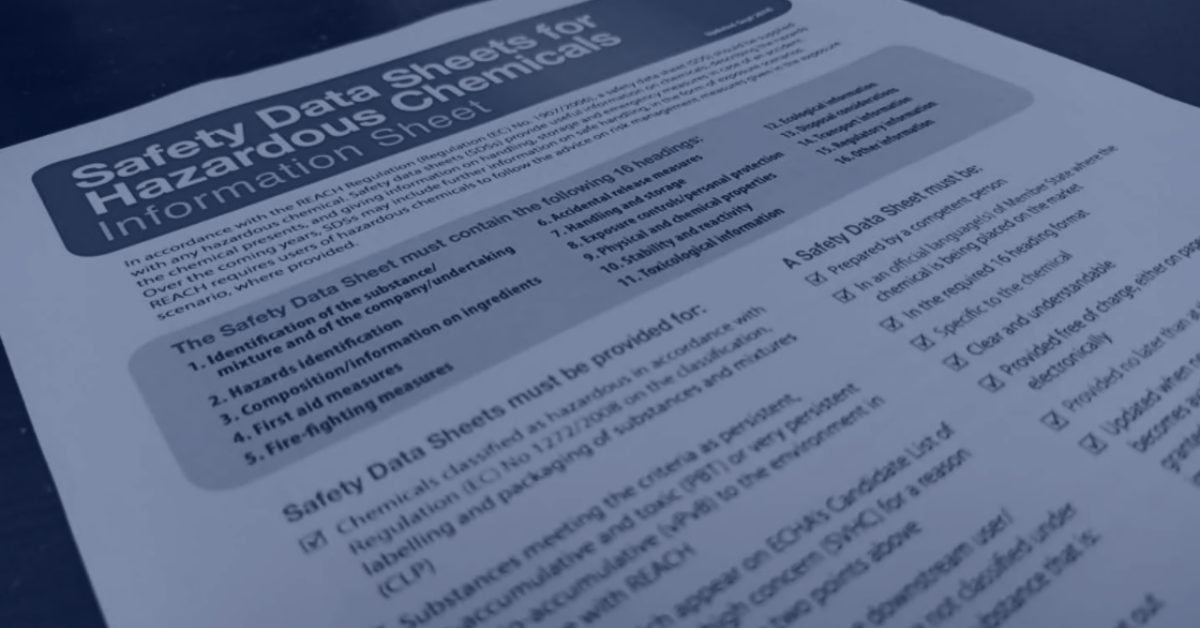
Third, at the documentation level. Your SDS are legal documents that reflect current classification, labelling, and hazard communication requirements across every market you sell into. SDSM, Yordas Group's Safety Data Sheet Management service, ensures that your SDS library is accurate, current, and compliant, so that when a regulation changes or a substance is reclassified, your documentation keeps pace.
The question worth asking
If a new PFAS restriction came into force tomorrow affecting a substance in your supply chain, how long would it take your organisation to know? How long would it take to assess which products are affected? How long to update your documentation and notify your customers?
For most discrete manufacturers, the honest answer to those questions is uncomfortable. The good news is that it does not have to be.
Regulatory intelligence is the infrastructure that keeps your products in market, your supply chain defensible, and your team focused on decisions rather than data retrieval.
FAQs
-
A standard regulatory database requires your team to query it. Helix Compliance Navigator monitors continuously against your specific substance portfolio and surfaces changes that are directly relevant to your products. The distinction matters in practice: a database tells you what the regulation says when you ask; Navigator tells you when something has changed that affects you, without requiring a manual check. For discrete manufacturers tracking PFAS phase-outs and REACH candidate list additions across multiple markets, that shift from reactive to continuous is where the operational value sits.
-
Helix Compliance Navigator is designed to work alongside your regulatory affairs function, not replace it. The platform removes the data retrieval burden so that your team can focus on interpretation, decision-making, and customer-facing work. In discrete manufacturing environments where substance portfolios are large and supply chains are multi-tier, the volume of regulatory change across REACH, RoHS, and PFAS frameworks alone exceeds what a small team can monitor manually without risk of gaps. Navigator closes the gap; your team acts on what it surfaces.
-
A Helix Custom engagement begins with Yordas Group by 3E's regulatory scientists mapping your substance universe, your market footprint, and your specific compliance obligations. The Helix platform is then configured to that profile, so the intelligence you receive is scoped to your actual risk landscape rather than a generic regulatory feed. The consultant-led model means you have qualified regulatory expertise available throughout, not just during onboarding. For organisations with complex portfolios, active M&A programmes, or multi-jurisdictional exposure, this is a meaningful difference from a self-serve software deployment.
-
Implementation timelines vary depending on the size of the substance portfolio, the number of markets in scope, and the maturity of existing compliance data. Most engagements reach operational readiness within eight to twelve weeks. Yordas Group by 3E's consultant team works alongside your regulatory and procurement functions to structure the substance data and configure the monitoring parameters. The phased approach means you gain visibility incrementally rather than waiting for a full deployment before the platform delivers value.
-
There is no single universal review cycle mandated across all jurisdictions, but best practice for discrete manufacturers selling into multiple markets is a structured review triggered by two conditions: a defined periodic interval, typically every two to three years as a minimum, and an event-based trigger when a substance is reclassified, a regulation is amended, or a new jurisdiction is added to your sales footprint. In practice, the event-based trigger is the one most organisations miss. SDSM monitors for regulatory changes that affect your SDS library and flags documents requiring revision, so your review process is driven by actual regulatory movement rather than a fixed calendar.
-
Yes. Yordas Group by 3E's SDSM service is built around multi-market compliance, covering GHS-aligned frameworks across the EU (CLP), UK (UK CLP post-Brexit), US (OSHA HazCom), and other jurisdictions depending on your market footprint. Each jurisdiction has specific requirements around format, section content, hazard classification language, and update timelines. SDSM maintains jurisdiction-specific versions of your SDS library and ensures that when a regulatory change occurs in one market, the relevant document version is updated without that change inadvertently propagating to markets where a different standard applies.
Further reading